

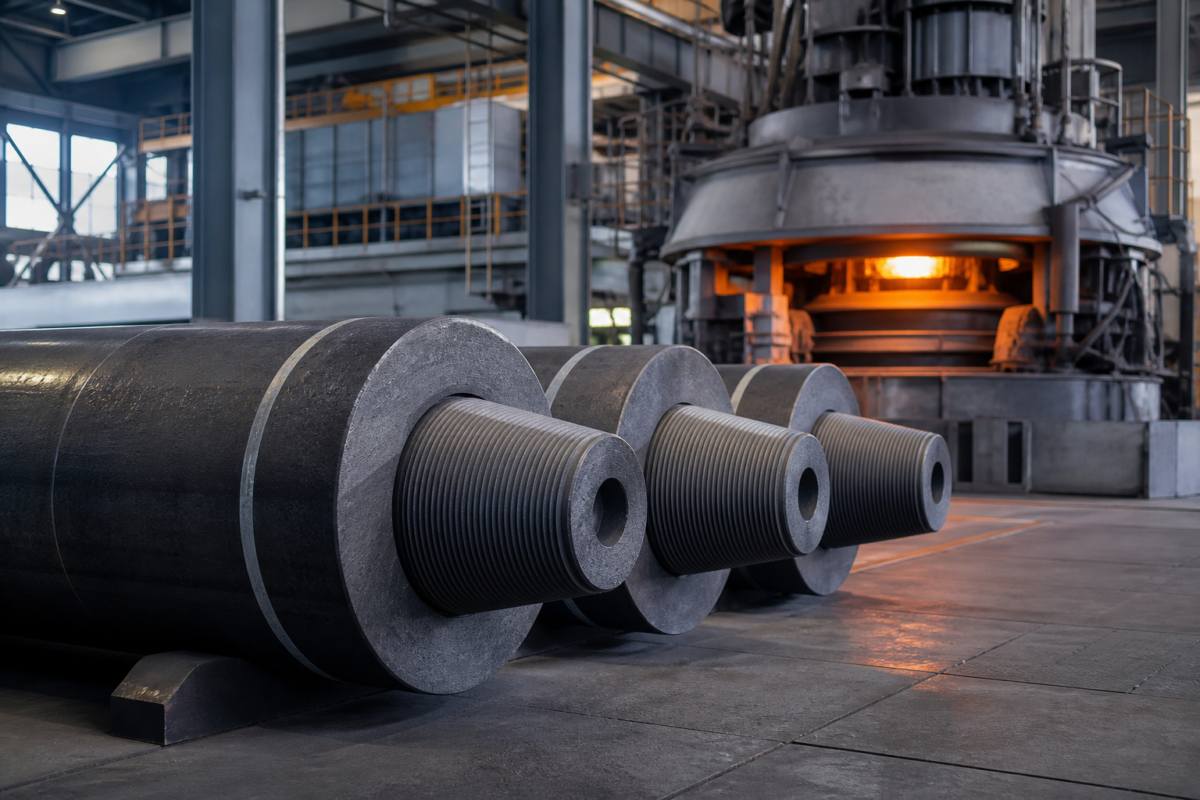
Graphite electrodes are among the most important consumables in electric arc furnace (EAF) steelmaking. They carry electrical energy into the furnace, where the arc generates the heat required to melt scrap and other metallic charge materials. Selecting the right electrode is therefore not only a purchasing decision: it directly affects furnace stability, energy efficiency, electrode consumption, operating continuity, and the total cost of each heat.
This practical guide explains the main graphite electrode grades, technical parameters, operating conditions, and procurement checks that steel producers should evaluate before placing an order.
Why graphite electrode selection matters
An electrode that does not match the furnace and operating practice can lead to excessive oxidation, sidewall cracking, joint failure, breakage, unstable arcs, or unexpectedly high consumption. In contrast, a correctly specified electrode supports reliable current transfer, stable furnace operation, and predictable performance.
The goal is not simply to purchase the highest grade available. The correct choice is the grade and dimension that safely meets the electrical, mechanical, and thermal demands of the specific furnace.
Main graphite electrode grades
Regular Power (RP)
Regular Power electrodes are designed for lower current densities and less demanding melting conditions. They may be suitable for smaller furnaces or applications where power input and thermal shock are moderate.
High Power (HP)
High Power electrodes offer improved electrical conductivity and mechanical performance compared with RP grades. They are commonly selected for furnaces operating at higher power levels or requiring greater resistance to thermal and mechanical stress.
Ultra High Power (UHP)
Ultra High Power electrodes are produced for demanding EAF operations with high current loads and intensive production cycles. Their low electrical resistivity, controlled thermal expansion, and high mechanical strength help them withstand severe operating conditions. UHP is often preferred for modern high-productivity steelmaking, but the final specification must always be matched to the furnace design and operating data.
Seven technical factors to evaluate
1. Furnace power and current carrying capacity
Start with the transformer rating, secondary voltage, maximum electrode current, furnace capacity, and expected current density. These values help determine whether RP, HP, or UHP electrodes are appropriate. The electrode supplier should review actual furnace parameters rather than recommending a grade only by furnace tonnage.
2. Electrode diameter and length
Diameter must match the electrode column, clamp system, electrical load, and furnace geometry. Common industrial sizes vary widely, and using the wrong diameter can create electrical or mechanical limitations. Length also influences handling, column stability, connection frequency, and inventory planning.
3. Electrical resistivity
Lower electrical resistivity generally reduces electrical losses and heat generation within the electrode body. This is especially important in high-power applications. Buyers should compare guaranteed specification ranges and confirm whether values apply to the electrode body, nipple, or both.
4. Bulk density and mechanical strength
Bulk density, flexural strength, and elastic modulus influence how the electrode behaves during lifting, connection, vibration, and furnace operation. These properties should be balanced: a strong electrode must also tolerate thermal stress without becoming excessively brittle.
5. Coefficient of thermal expansion
A low and consistent coefficient of thermal expansion helps reduce internal stress during rapid heating and cooling. It is a critical property for operations with frequent power changes, long arcs, or demanding melting cycles.
6. Nipple and joint accuracy
The joint is one of the most sensitive parts of the electrode column. Thread geometry, machining accuracy, nipple quality, and correct tightening all affect electrical contact and mechanical stability. Poorly matched or contaminated connections can cause hot joints, loosening, or breakage.
7. Raw materials and manufacturing consistency
High-quality needle coke, controlled graphitization, precise machining, and consistent quality control contribute to dependable electrode performance. Procurement teams should evaluate batch consistency and documentation, not only the nominal grade printed on a quotation.
Information to include in a graphite electrode inquiry
A complete request for quotation allows the supplier to recommend a more accurate and commercially efficient solution. Include the following information whenever possible:
- Electric arc furnace or ladle furnace application
- Furnace capacity and transformer rating
- Operating current and secondary voltage range
- Required electrode diameter and length
- Requested RP, HP, or UHP grade
- Nipple type, thread specification, and connection requirements
- Typical tap-to-tap time and operating practice
- Current electrode consumption and known failure modes
- Required inspection documents, packaging, quantity, and destination port
Handling and storage practices that protect performance
Even well-manufactured electrodes can be damaged by poor handling. Store them in a clean, dry area and protect threaded ends from impact, dust, moisture, and contamination. Use approved lifting equipment and avoid dropping or rolling electrodes on hard surfaces.
Before connection, clean the sockets and nipple threads, inspect for visible damage, align the components carefully, and use the recommended tightening procedure. The clamp should grip the correct area of the electrode body and should not damage the surface. These simple controls help prevent joint problems and premature breakage.
How to compare supplier quotations
Price per tonne is only one part of the commercial comparison. Buyers should also evaluate guaranteed technical specifications, electrode and nipple tolerances, quality documentation, packaging, delivery reliability, traceability, and technical support. A lower initial price may not deliver the lowest cost per tonne of steel if consumption, breakage, or downtime increases.
For a fair trial, document the furnace conditions, heats produced, electrode additions, breakages, oxidation losses, and remaining electrode lengths. Comparing suppliers under similar operating conditions produces a more meaningful performance assessment.
A practical selection checklist
- Match the grade to actual furnace power and operating intensity.
- Confirm diameter, length, socket, nipple, and thread compatibility.
- Review electrical, thermal, and mechanical specifications together.
- Request batch-level inspection and quality documentation.
- Evaluate total operating cost, not purchase price alone.
- Define safe handling, storage, and connection procedures.
- Work with a supplier that can coordinate technical requirements and international logistics.
Graphite electrode sourcing with Hila Dış Tic Ltd
Hila Dış Tic Ltd supports steel plants and industrial buyers with international sourcing, commercial coordination, logistics planning, and supply of graphite and carbon products. Explore our graphite electrode product page and the complete Graphite & Carbon product category.
If you are preparing a new inquiry, share your furnace parameters, required dimensions, target grade, quantity, and delivery destination through our contact page. Our team can review the requirements and help develop an appropriate supply proposal.
Frequently asked questions
What is the difference between RP, HP, and UHP graphite electrodes?
The grades are designed for different power levels and operating demands. RP is intended for moderate conditions, HP provides higher performance, and UHP is engineered for high-current, intensive EAF operation. Furnace data should determine the final selection.
Is a larger electrode always better?
No. Diameter must match the furnace, electrode column, clamp, and electrical operating range. An oversized or undersized electrode can create operational and mechanical problems.
Why do graphite electrode joints fail?
Common contributors include incorrect tightening, damaged or contaminated threads, poor alignment, incompatible nipples, excessive mechanical stress, and unsuitable operating conditions. Joint inspection and correct connection procedures are essential.
What should buyers request from a supplier?
Request a detailed technical data sheet, dimensional tolerances, nipple specifications, quality documentation, packing details, delivery terms, and traceability information. For important trials, agree on the performance evaluation method before delivery.
