

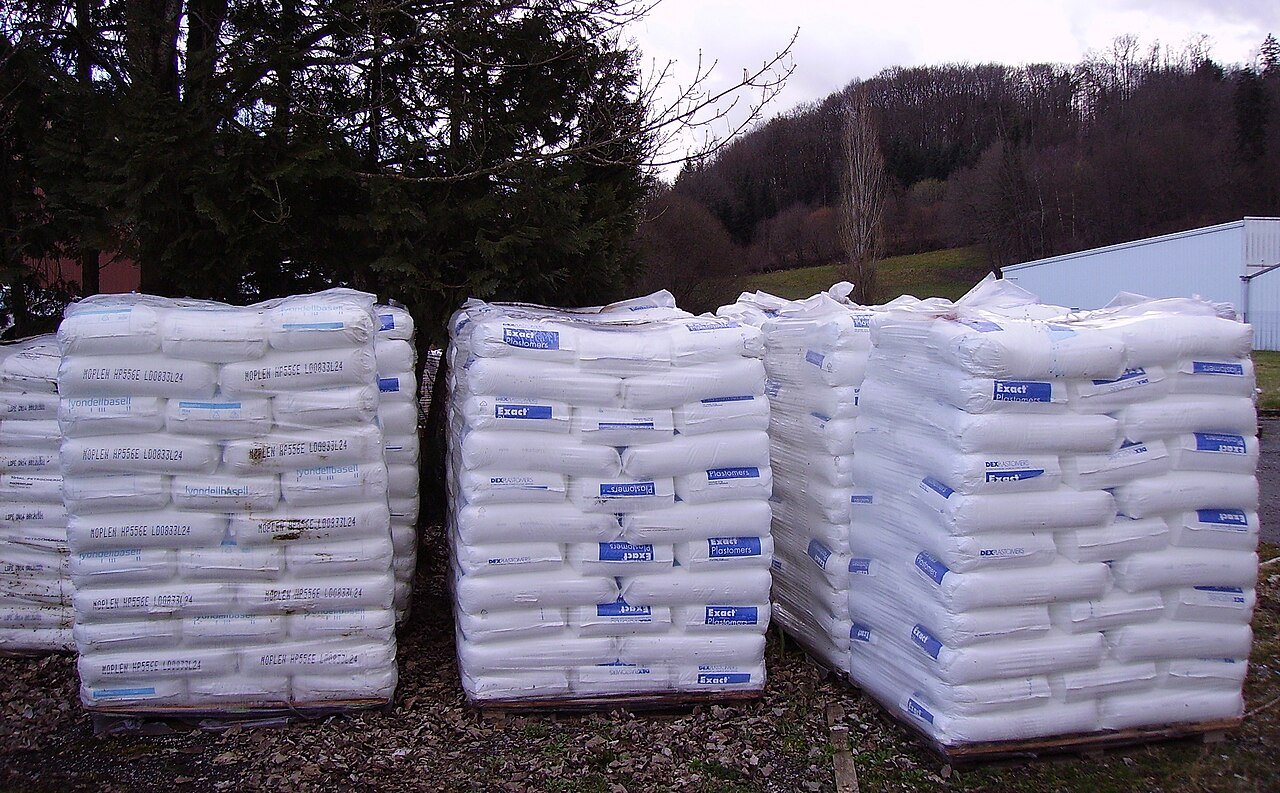
Choosing a polymer resin starts with the product requirement and processing route—not with a familiar grade name. Polyethylene and polypropylene cover a wide range of stiffness, toughness, chemical resistance, clarity, heat resistance, and processability.
Define the application
List the part geometry, service temperature, mechanical loads, chemicals, UV exposure, food-contact or regulatory needs, expected lifetime, color, and recycling target. Separate mandatory requirements from preferences.
Understand the main families
HDPE offers good stiffness, chemical resistance, moisture resistance, and toughness for products such as containers, pipe, and industrial parts. LDPE and LLDPE provide flexibility and impact performance often required in film and flexible applications. Polypropylene generally offers higher stiffness and service temperature, low density, and good fatigue resistance.
Match the process
Injection molding, blow molding, film extrusion, pipe extrusion, fiber, sheet, and rotational molding require different molecular-weight distributions and rheological behavior. Melt flow rate is useful, but it is not a universal quality ranking. A high-flow injection grade may be unsuitable for extrusion.
Key data-sheet checks
- Melt flow rate and test condition
- Density and comonomer type
- Tensile, flexural, and impact properties
- Vicat or heat-deflection temperature
- Environmental stress-crack resistance where relevant
- Additive package, UV stabilization, slip, antiblock, or nucleation
- Regulatory declarations and test methods
Homopolymer, random and impact PP
PP homopolymer typically emphasizes stiffness. Random copolymer grades can improve clarity and impact balance. Impact copolymers are selected when toughness, especially at lower temperature, is important. The correct choice depends on the part and process.
Validate with a controlled trial
Run the candidate resin using documented machine conditions and compare output rate, pressure, stability, appearance, dimensions, mechanical tests, scrap, and cycle time. Do not approve a substitution only because nominal melt flow is similar.
Commercial checks
Confirm supply continuity, packaging, lot traceability, certificate of analysis, storage conditions, delivery terms, and change-notification policy. Total value includes processing stability and rejected-part risk.
Explore Hila’s plastic and polymer products or request sourcing support.
