

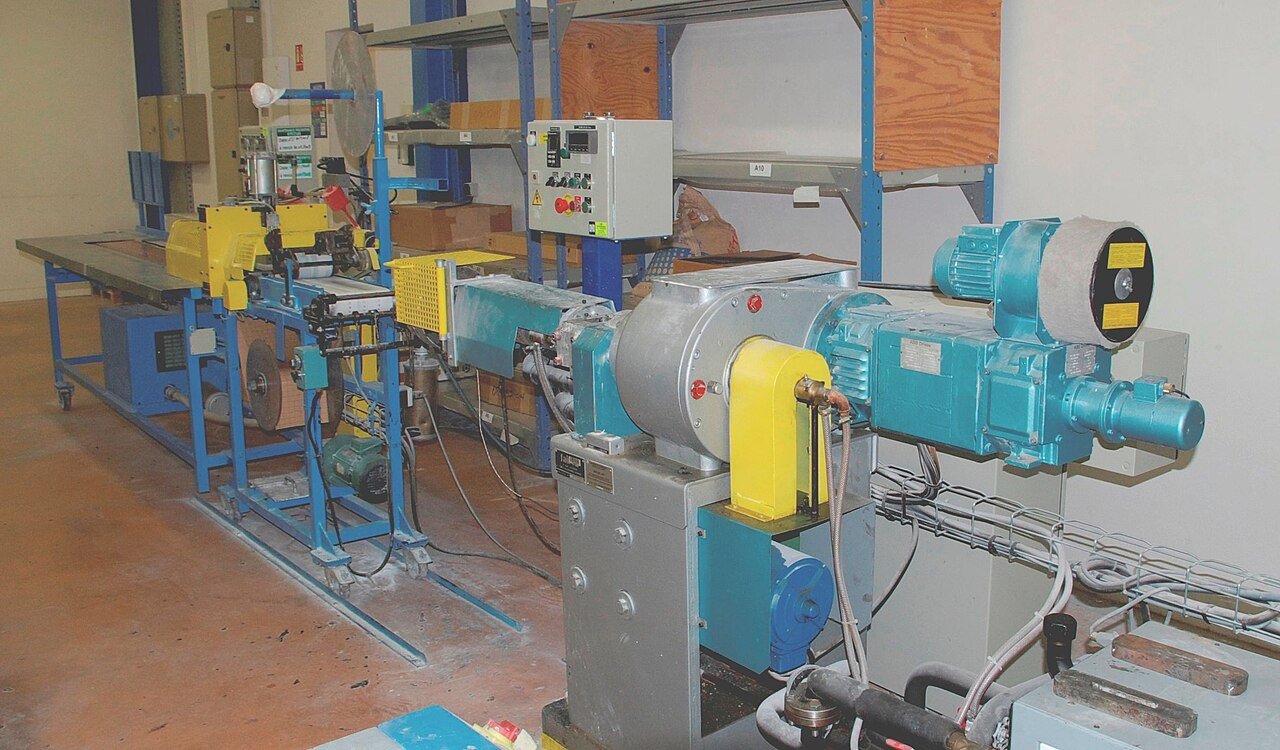
Extrusion defects are often caused by interactions between resin, drying and handling, screw and die condition, temperature profile, cooling, and downstream equipment. Changing several settings at once hides the root cause. A better method is to define the defect, stabilize the line, and test one variable at a time.
Surging and output variation
Check feed consistency, bridging in the hopper, regrind variation, screw condition, drive load, temperature control, and downstream puller stability. Trend pressure and motor load to distinguish feeding problems from die or cooling problems.
Melt fracture and rough surface
Excessive shear at the die, unsuitable resin rheology, low die temperature, contamination, or restricted flow may contribute. Confirm the resin grade and melt-flow test condition before changing processing temperature.
Gels, black specks and contamination
Possible sources include degraded polymer, dead spots, long residence time, poor purging, incompatible regrind, dirty conveying systems, or external contamination. Identify whether the defect is carbonized, unmelted, or foreign material.
Bubbles and voids
Moisture, trapped air, volatile contamination, excessive regrind, or unstable feeding can create bubbles. Dry hygroscopic materials according to the supplier’s guidance and verify dryer dew point, airflow, time, and actual material temperature.
Dimensional variation
Review melt-temperature stability, pressure, die centering, cooling uniformity, line speed, haul-off, and winding tension. Measure the defect across time and position to identify periodic or one-sided causes.
Troubleshooting sequence
- Define the defect with photographs and measurements.
- Retain resin, regrind, and finished-product samples.
- Record the complete recipe and actual machine trends.
- Check recent changes in lot, additives, maintenance, and environment.
- Inspect feeding, screw, screen, die, cooling, and downstream equipment.
- Change one controlled variable and document the response.
Preventive controls
Use lot traceability, material segregation, documented regrind limits, dryer verification, preventive maintenance, screen-change records, standardized startup and shutdown, and a retained-sample system.
Key takeaway
A defect name is not a root cause. Use evidence to determine whether the source is material, machine, method, or downstream control before changing suppliers or process settings.
For polymer sourcing and commercial coordination, contact Hila Dış Tic Ltd.
