

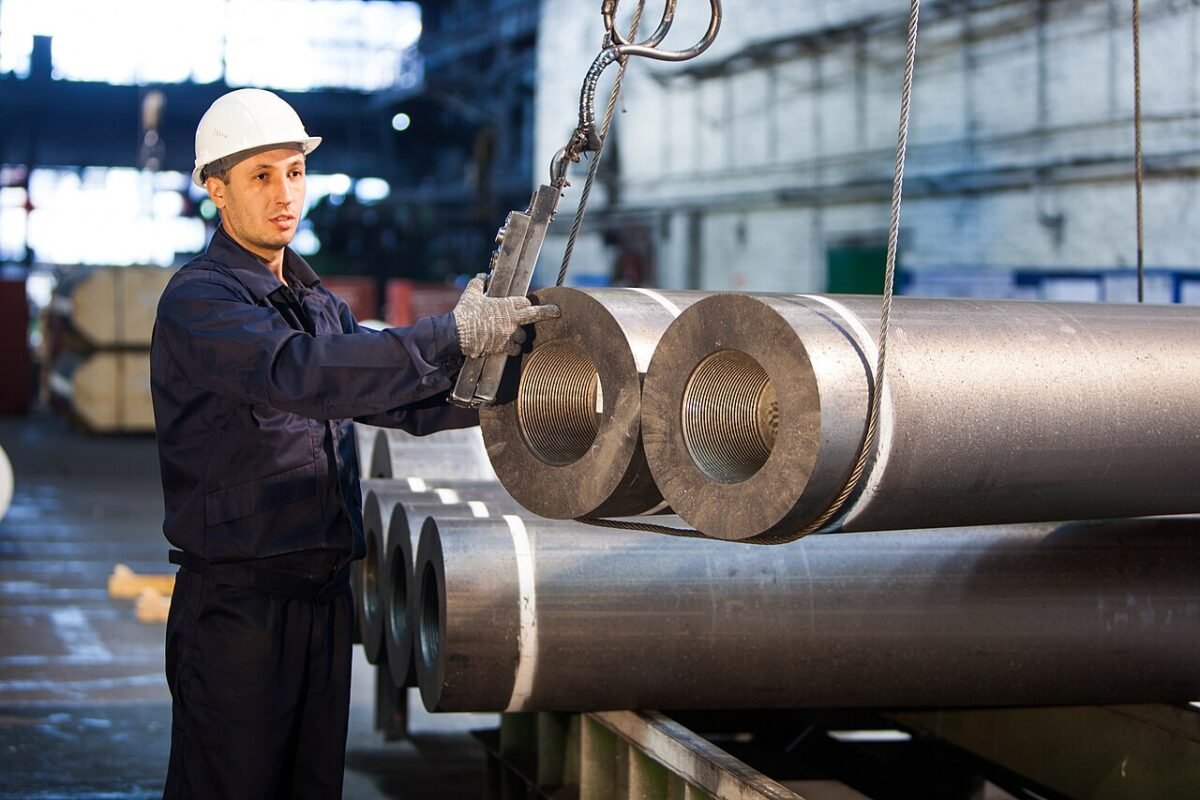
The joint is the most sensitive mechanical and electrical interface in an electrode column. It must transfer high current while carrying the weight and dynamic loads of the lower electrode sections. A reliable joint depends on compatible geometry, clean threads, correct alignment, and controlled tightening.
Typical failure modes
- Nipple fracture inside the joint
- Socket cracking near the electrode end
- Joint loosening during furnace operation
- Hot joint caused by poor electrical contact
- Cross-threading or incomplete engagement
- Mixed or incompatible electrode and nipple dimensions
What to inspect before connection
Keep thread protectors fitted until the connection area is ready. Inspect the female socket and the solid graphite nipple for chips, cracks, contamination, moisture, and impact damage. Verify that the nipple designation, thread pitch, gauge, and supplier compatibility match the electrode specification.
Connection practice
Support the column vertically and align the new electrode with the axis of the lower section. Never use the nipple to correct a visibly misaligned column. Clean threads with the supplier-approved method, start engagement without impact, and use the recommended tightening device and torque procedure. Marking the joint can help operators detect rotation.
Why joints become hot
Heat can develop when contact resistance rises. Causes include dirty threads, insufficient tightening, damaged profiles, thread mismatch, or partial separation. A hot joint is a warning condition; continuing operation without investigation can lead to loss of the lower column.
After a joint failure
- Preserve both sockets and the nipple fragments.
- Record which portion remained in each socket.
- Check for impact, thread pull-out, oxidation, and abnormal heat marks.
- Review tightening records and operator observations.
- Compare dimensions and batch identification with the certificate.
- Inspect the connecting stand and alignment system.
Prevention checklist
Use compatible components, protect threads during storage, keep the connection area clean, train operators, maintain calibrated tightening equipment, and never reuse a questionable nipple. Joint reliability is a system outcome—not a single material property.
Send connection requirements and furnace data through Hila’s contact page for a coordinated quotation.
