

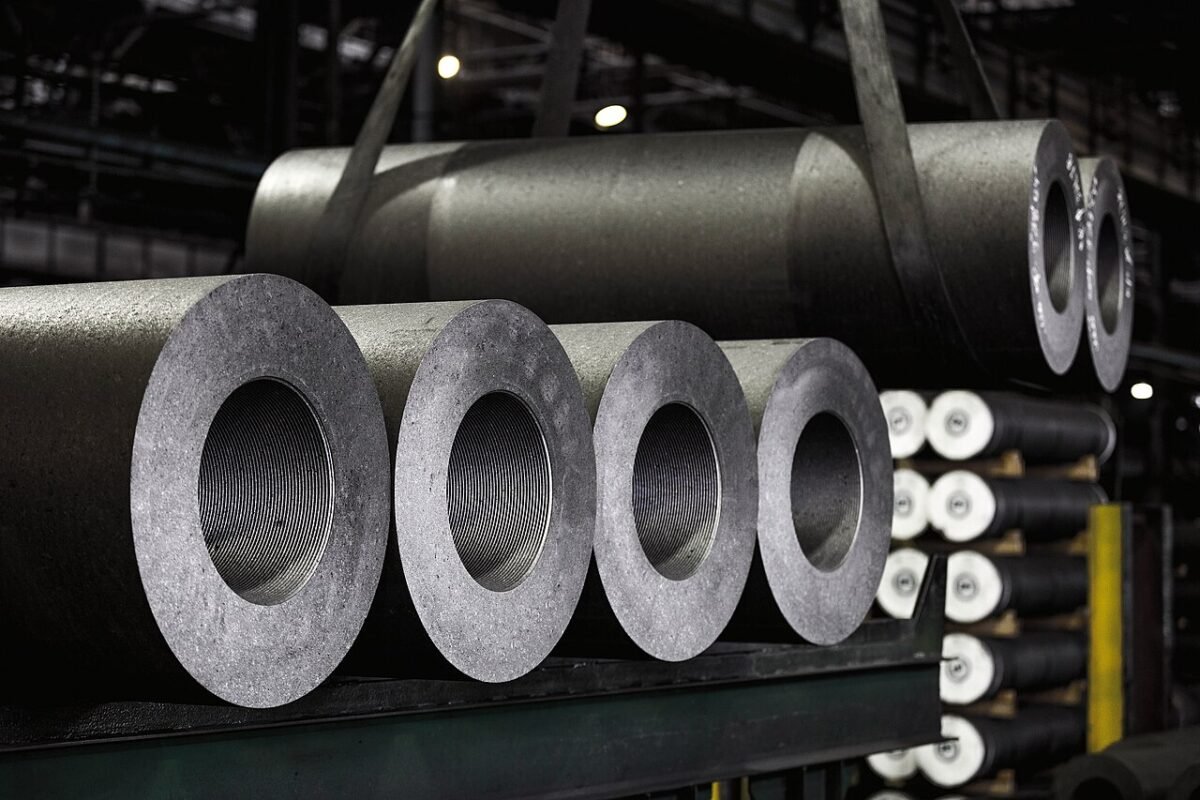
Graphite electrodes are strong in service but can be damaged by impact, poor support, contaminated threads, and incorrect lifting. A simple handling standard protects product value before the electrode ever reaches the furnace.
Receiving inspection
Check packages before unloading. Record wet packaging, broken bands, crushed protectors, forklift impact, or movement inside the bundle. Verify quantity, diameter, length, grade, nipple type, and batch identification against shipping documents.
Storage rules
- Store electrodes horizontally on level, padded supports.
- Use enough supports to prevent bending and rolling.
- Keep the area dry, clean, and separated from oil, steel scale, and chemicals.
- Leave socket and nipple protectors in place.
- Segregate grades, diameters, suppliers, and batches.
- Use first-in, first-out control where practical.
Safe lifting
Use approved lifting plugs, soft slings, or supplier-recommended devices. Never lift by an exposed nipple or insert an unapproved hook into a socket. Prevent the electrode from striking floors, racks, columns, or adjacent pieces. Establish an exclusion zone and use tag lines where required.
Preparing the connection
Move the electrode to a clean connection stand. Remove protectors immediately before inspection. Check the full socket and nipple surfaces for damage and contamination. Use only the cleaning method and tightening procedure approved for the connection design.
During furnace operation
Place the clamp on the designated sound body area, not over the joint or damaged surface. Confirm column alignment and adequate roof-port clearance. Observe unusual vibration, rotation, hot joints, or phase-specific regulator movement.
Handling incident protocol
If an electrode is dropped or heavily struck, quarantine it. Record the location and severity of impact and request technical inspection. Returning a damaged electrode to stock without identification transfers a warehouse incident into the melt shop.
Practical records
A strong system uses receiving photographs, package numbers, batch traceability, inspection results, lifting-equipment checks, connection records, and operator training logs. These records are valuable when investigating breakage or comparing suppliers.
Explore Hila’s graphite electrode offering for international supply coordination.
