

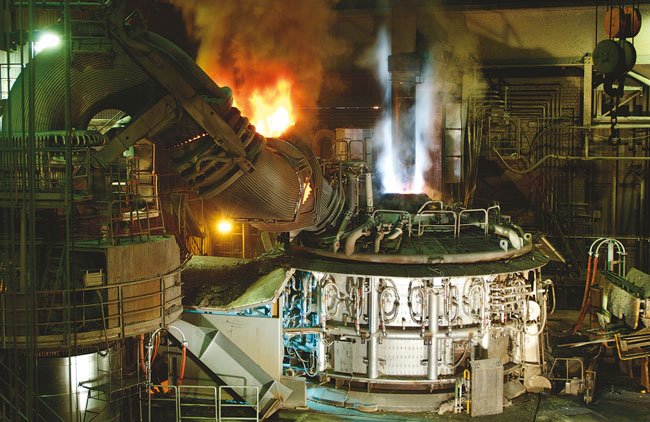
Electrode performance is closely connected to furnace practice. Two plants using the same grade can obtain different consumption and reliability because scrap, electrical regulation, oxygen use, foamy slag, delays, and mechanical condition are different.
Scrap preparation and charging
Dense, conductive scrap supports a stable bore-down path. Long or poorly prepared pieces can bridge, collapse against the column, or force repeated repositioning. Keep heavy pieces away from direct impact zones and control bucket loading to reduce cave-ins.
Power program and arc stability
The transformer tap, reactor setting, current, voltage, and arc length should match the stage of melting. Excessive current density or unstable long arcs increase electrical and thermal stress. Review regulator response and phase balance rather than relying only on total energy.
Foamy slag and oxygen practice
A controlled foamy slag can shield the arc, improve energy transfer, and reduce radiation to panels and roof. Poorly controlled oxygen or carbon injection can expose the electrode to oxidation, create violent reactions, or destabilize the bath.
Mechanical system condition
Electrode arms, clamps, hydraulic cylinders, mast guides, and roof openings must remain aligned. Clamp slippage, vibration, or a restricted roof port can produce mechanical loads that the electrode was not intended to carry.
Delays and power-off periods
A hot electrode column continues to oxidize when exposed to air. Track crane delays, furnace stoppages, sample waits, and maintenance interruptions. Long delays should be part of the consumption analysis.
Daily indicators
- Consumption by phase
- Breakage and dropped-joint events
- Power-on and tap-to-tap time
- Electrical energy and oxygen per tonne
- Arc-regulator alarms and phase imbalance
- Scrap mix and bucket changes
- Electrode additions and remaining lengths
Using data effectively
Compare campaigns with similar furnace conditions. A supplier trial is meaningful only when scrap, operating practice, and measurement rules are documented. Review outliers heat by heat and connect them to physical evidence.
Conclusion
The electrode is part of a complete operating system. Improvements are most durable when purchasing, operations, maintenance, and the supplier use the same failure definitions and records.
Discuss furnace parameters and sourcing requirements with Hila Dış Tic Ltd.
